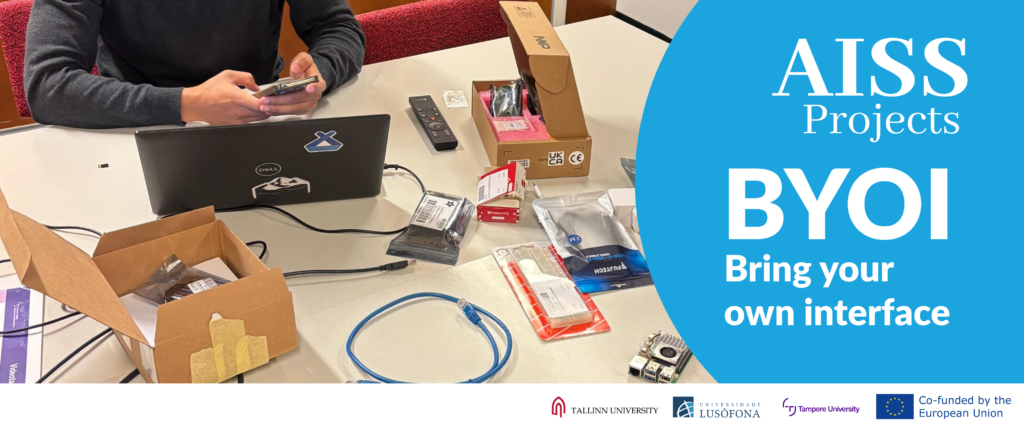
At the Erasmus Mundus Joint Master’s in Artificial Intelligence for Sustainable Societies (AISS), students explore how technology can respond to challenges that affect people’s everyday lives. BYOI, short for Bring Your Own Interface, offers one example of this approach.
Second-cohort students Kishor Ghising and Victor Sales are developing the project as part of the Interdisciplinary Project course at Tampere University. Their goal is to help blind people interact independently with self-service machines through their own smartphones.
Connecting learning with societal challenges
AISS brings together artificial intelligence, sustainability and participatory design. Students study across Tallinn University in Estonia, Lusófona University in Portugal and Tampere University in Finland, engaging with different academic environments and perspectives on technology and society.
The Interdisciplinary Project course in Tampere gives students a setting in which to connect these perspectives through a concrete project. In BYOI, the technical work starts with a question about access: how can someone use a public touchscreen when its interface does not provide the feedback they need?
Investigating that question brings social considerations into the development process. Understanding how people encounter a service helps shape what the team builds and how it plans to evaluate the result.
An everyday accessibility barrier
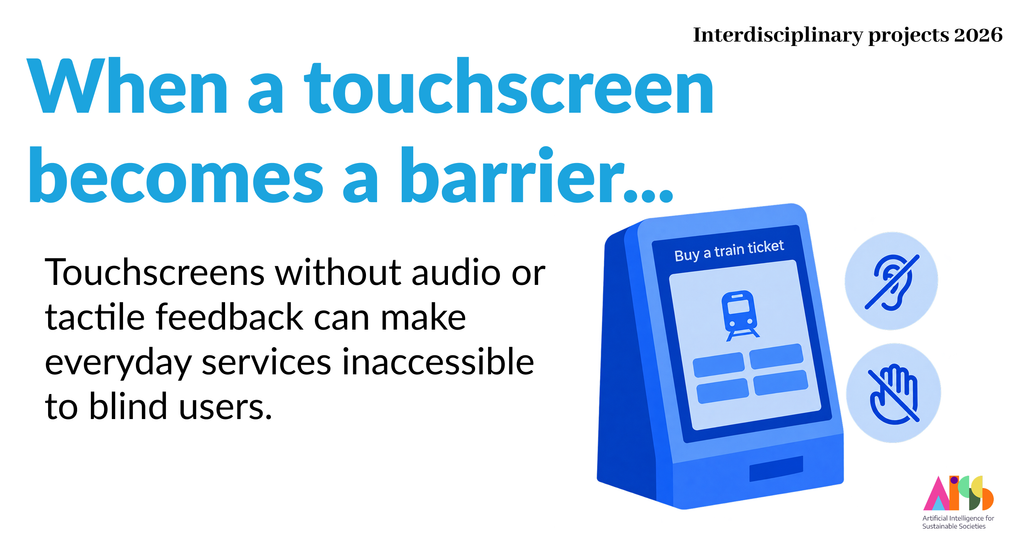
Ticket machines, vending machines and other self-service terminals often rely on visual menus. Without accessible feedback, these interfaces can leave blind users dependent on assistance to complete everyday tasks.
The team’s literature review included Toucha11y, a study published at CHI 2023. In its formative interviews, six of nine blind participants reported never having used a public kiosk, although all nine used personal touchscreen devices daily.
BYOI builds its proposal around those familiar personal devices. The user would navigate the machine’s options through their own phone, using a screen reader whose settings and controls they already know.
Developing and demonstrating the idea
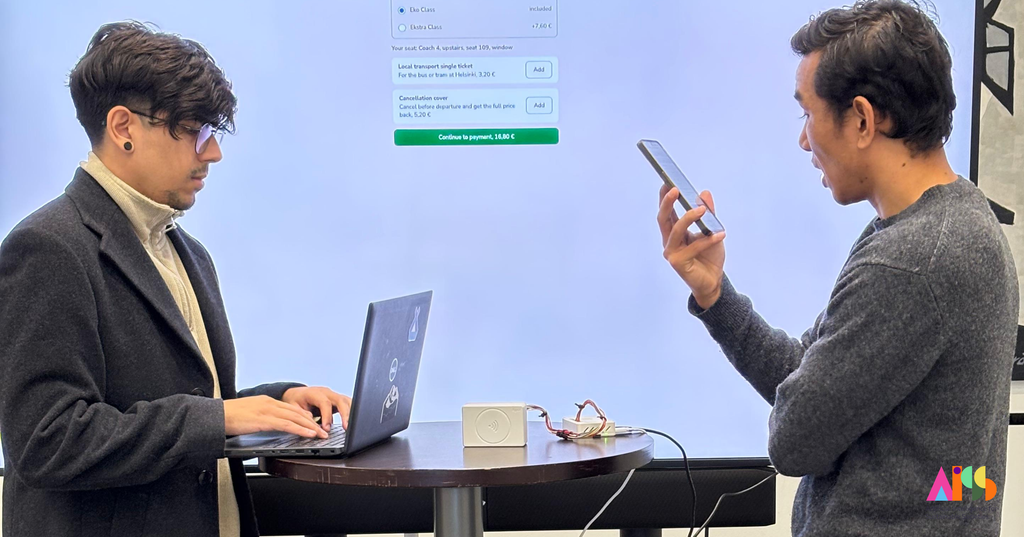
A tap on a marked NFC point starts the connection, and Bluetooth carries the interaction between the terminal and the phone. BYOI draws on structured accessibility information from the machine’s software to communicate available options and their states.
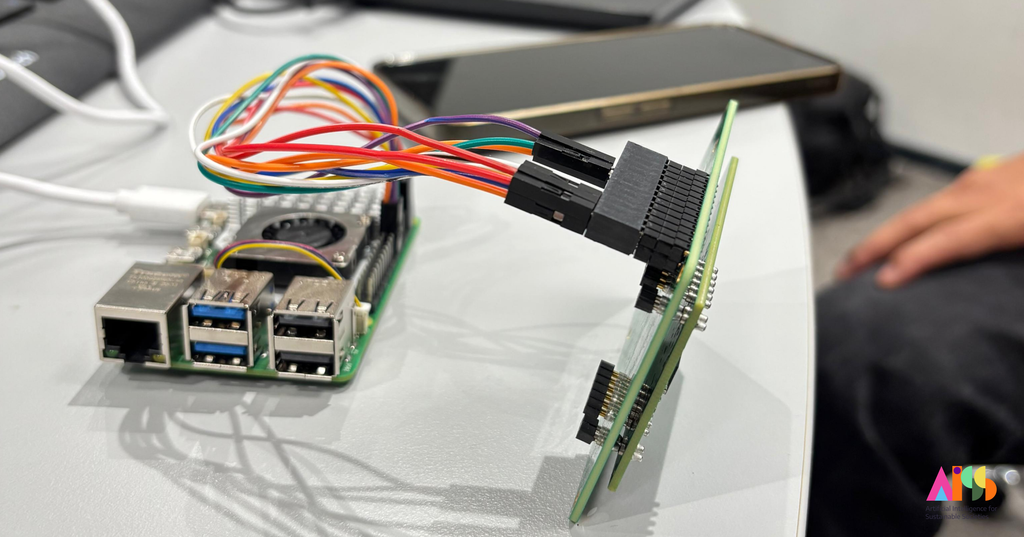
The team has built a working prototype with a simulated rail ticket machine running on a Raspberry Pi and an Android application designed for TalkBack.
The ticket-purchase demonstration provides a concrete example of the interaction they are developing. The broader ambition is to extend the approach to other self-service machines with graphical interfaces. Compatibility will depend on the accessibility information available in each system.
Learning through an interdisciplinary project
Developing BYOI involves connecting research about accessibility with decisions about interaction design and hardware integration. Building the Android application gives the team another part of the system to develop alongside the terminal. Their project plan also includes evaluating responsiveness and how sessions begin and end.
This work illustrates how an AISS project can bring technical development into contact with questions of independence and participation. These concerns connect to the programme’s focus on sustainable digital societies and active citizenship.
BYOI offers a concrete example of learning through projects at AISS: investigating a societal challenge and developing a technical response while considering how people would actually use it.
Explore the AISS programme and meet the students shaping its community.